Yoga is an interesting fitness concept that blends perfectly stretching, meditation, exercise and spirituality. It is like marmite though, you either love it or you hate it.
For a better understanding of what yoga is, I have gathered a lot of fun and interesting facts.

Different styles of yoga
Yoga styles vary in intensity, pace, focus, and safety considerations, making different styles more suitable depending on experience, health, and goals.
• Hatha Yoga: Gentle and basic, good for beginners to learn easy postures and breathing. Generally safe and low-risk.
• Restorative and Yin Yoga: Slow, meditative, focus on deep stretching and relaxation. Safe for most and beneficial for stress relief, but Yin requires patience to progress.
• Iyengar Yoga: Slow, precise, uses props for alignment. Very safe and accessible, suited for people with injuries or physical limits.
• Vinyasa/Flow Yoga: Dynamic and aerobic, linking breath with movement. Higher physical demand; beginners should start with slower classes to avoid injury.
• Hot Yoga: Performed in heated rooms; helps flexibility but increases risks of dehydration and heat stress. Not recommended for people with certain health problems.
• Ashtanga and Power Yoga: Physically demanding and fast-paced with set or flowing sequences. Good for experienced practitioners, but higher injury risk if not careful.
• Restorative and Sivananda Yoga: Focus on relaxation, suitable for all levels, especially those seeking gentle practice or healing.
Overall safety tips: Practice under qualified instructors, avoid extreme poses if new or with pre-existing conditions, stay hydrated especially in hot yoga, and modify poses to personal ability.
To summarise, gentler styles like Hatha, Iyengar, or Restorative are safest for beginners or those with health concerns, while more vigorous styles offer fitness benefits but carry higher injury risk if not practiced mindfully.
My teaching style of yoga is a combination of Hatha, Vinyasa and Ashtanga.

Mental health effects of yoga
Yoga positively affects mental health in multiple ways:
• It reduces symptoms of depression and anxiety by downregulating the stress response system, lowering cortisol levels.
• Yoga practice enhances neurotransmitters, which promote relaxation and calmness.
• Regular practice improves brain structure and function, and better connectivity in networks related to self-awareness and mood regulation.
• Yoga fosters psychological well-being through increased mindfulness, self-regulation, and resilience, helping reduce emotional distress and improve mood.
• It may act similarly to psychotherapy by promoting adaptive thinking, better sleep, nutrition, and overall lifestyle changes beneficial for mental health.
• Studies show yoga as an effective adjunct treatment for depression, anxiety, and symptoms in psychiatric disorders like schizophrenia.
Overall, yoga supports mental health by combining physical movement, breathing exercises, and meditation to reduce stress, improve mood, and enhance brain function.

Pros and cons of yoga
Yoga offers significant physical and mental benefits, but also presents some drawbacks, mostly related to injury and individual experience.
Pros:
• Improves flexibility, strength, and balance, which benefits overall physical fitness and can support other activities.
• Promotes stress reduction, relaxation, and better mental health through mindfulness and controlled breathing.
• Enhances body awareness and helps develop healthier lifestyle habits and self-care.
• May help with pain management and alleviate symptoms in some chronic conditions.
Cons:
• Risk of injury, particularly musculoskeletal strains, overstretching, or aggravating existing conditions—especially if practiced without proper technique or guidance.
• Some group classes provide little personalized attention, increasing injury risk for beginners or those with physical limitations.
• Certain poses can raise risks for people with specific health problems (e.g., those with glaucoma or hypertension should avoid inversions).
• Some people feel mental pressure to progress quickly or experience negative self-comparison, which can interfere with the intended benefits.
Yoga is generally safe and effective for most, but it’s important to practice mindfully, respect personal limits, and consult with a healthcare provider if there are underlying health concerns.
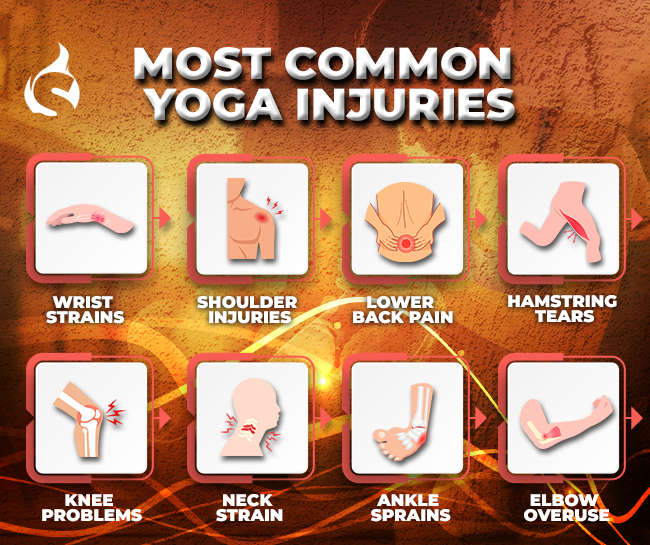
Common injuries linked to yoga practice include muscle strains, sprains, and pain—especially in the back, neck, shoulders, and knees. These arise from overstretching, poor alignment, or repetitive stress. Specific injuries frequently seen are:
• Rotator cuff injuries (shoulder).
• Wrist injuries such as carpal tunnel syndrome and tendinitis, especially from poses that require weight-bearing on the hands.
• Knee injuries, including meniscus and ligament tears, often associated with lotus or deep knee bends, especially in practitioners lacking hip flexibility.
• Spinal injuries, such as herniated discs, typically from excessive forward bends or backbends, and repetitive strain.
• Hip injuries from extreme stretching postures or leg-behind-head poses.
• Elbow injuries due to repetitive strain.
Most of these injuries occur when individuals attempt advanced poses without adequate preparation or push themselves beyond their limits. Use of proper technique, awareness, and modifications can significantly reduce risk.

The key difference between yoga and Pilates lies in their origins, goals, and focus:
• Yoga is an ancient spiritual and physical practice from India that combines physical poses (asanas), breathing techniques (pranayama), meditation, and a philosophy aimed at uniting mind, body, and spirit. It emphasizes flowing movements or holding static poses and incorporates a spiritual and ethical dimension. Yoga focuses on flexibility, broad muscle engagement, balance, and mindfulness.
• Pilates, developed in the early 20th century by Joseph Pilates, is a physical fitness system focused on controlled, precise movements, core strength,, body control, and rehabilitation. Pilates often involves repeated controlled movements and can make use of special equipment like reformers, though it is also done on mats. It emphasizes strengthening the core muscles to increase stability and address back pain or injury.
Additionally:
• Yoga incorporates a spiritual and meditative aspect, while Pilates is more about physical rehabilitation and body control.
• Yoga often flows more freely through postures or holds them for longer, whereas Pilates uses controlled repetition with a focus on precise muscle engagement, especially the core muscles.
• Equipment use differs: Pilates commonly uses machines and equipment for resistance; yoga uses props like blocks or straps mainly to modify poses or deepen stretches.
Both practices share benefits like improved strength, flexibility, breath awareness, and body alignment, but they approach the mind-body connection differently.
In summary, yoga is a holistic spiritual and physical practice emphasizing flexibility and mindfulness, whereas Pilates is a modern physical conditioning system focusing on core strength, control, and rehabilitation. Your choice depends on whether you seek a more spiritual or a rehabilitative physical approach.
I hope you find this article helpful. I hope you’ve learnt something new and now you can choose your workouts having a better understanding of what yoga is about.
And remember: Never give up on your dreams!
MB